Last winter I was riding my new horse, Ginger, and ponying my regular horse, Gwenevere, in a shallow creek. I was training Ginger to walk in water without fear. A friend, Martha McNiel, and her horse, Nick, were along for the ride. The creek we were riding in was higher than usual as it had recently rained. As we rode, the water levels were rising and I judged them to be getting too deep to be safe. I decided to climb up the embankment out of the creek, to ride on flat land again. I rode up the embankment, leading my other mare out of the creek. Martha and her Arab, Nick followed behind us on the same path. Suddenly the muddy bank gave way under Nick’s front feet. Nick and Martha both fell backwards into the cold creek.
Martha slid off Nick and climbed out of the creek to safety, but Nick ran off downstream. He soon lost his footing in the deep water. He began to thrash violently and contort his body in complete panic. Legs flailing and rolling from side to side, his desperation mounting, it seemed no matter what he did, he couldn’t get his legs under him and stand up. His body wrenched in ever direction and he just got deeper and deeper in the creek, until all at once he just stopped and lay still. Only his nostrils showed above the water, and he was straining to breathe. I jumped into the creek, tugged on his saddle and rocked Nick to his feet. He left the creek wet and scared but completely unharmed, but Martha and I both aged ten years. She is still discussing the incident with her therapist. We were fortunate that day and things turned out well. Now we are both better winter riders.
1 Before setting off, warm your horse up properly.
2 Hypothermia is very common in persons outdoors in the winter. Wear layers and pack clothing in your saddle bags for temperature drops of at least 20 degrees. Your jacket should be wind and rain proof, preferably of modern lightweight breathable fabrics like Gore-Tex. (Protect your face, head, and hands, too.)
4 A basic survival kit of matches or a lighter, a “survival or space blanket” and a cell phone, are all light enough to carry, and could be life-savers in an emergency.
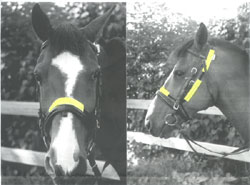
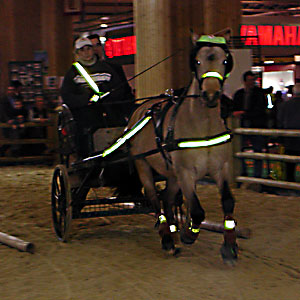
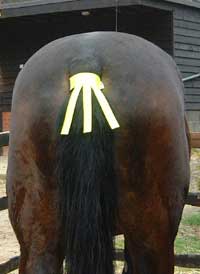
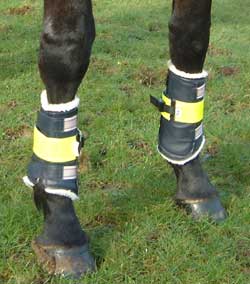
5 You should carry a small flashlight. Reflective strips on your jacket and helmet will make you more visible after dark, should you get lost or have to cross roads.
6 Always tell someone where you plan to ride and when you plan to return.
7 Watch for changes in the trail conditions due to weather, watch for fallen trees, standing or running water, and slippery or loose footing. Avoid drop-offs on trails and steep embankments.
8 When riding in water make sure you can see the bottom and avoid riding in flowing water deeper than one foot. For swifter currents limit the depth to eight inches.